European Network for
Environmental Medicine

The EnvMed Network is a nonprofit organisation engaged in establishing Environmental Medicine.
Given the increasing amount of harmful chemicals in the environment and the growing scientific evidence of correlations with chronic diseases, we are committed to reduce environmental exposures, promoting research into health links and treatments, better aligning medical care with these findings, and facilitating patient access to analysis.

Dental Amalgam

News

Brazil: Health Committee approves Phase out of Dental Amalgam by 2030

On 3 December 2025, the Health Committee of the Chamber of Deputies approved the phase-out of mercury-based dental amalgam. The proposal, PL 3098/2021, will now move to the Justice and Citizenship Committee and, if approved, be sent to the Senate. The law would ban amalgam use for pregnant and breastfeeding women, children under 15, and individuals with certain health conditions, while requiring dental services to implement a plan to fully eliminate mercury-based materials by 2030…

Read More »

Law to end dental amalgam in Northern Ireland

On 3 December 2025, legislation to phase out dental amalgam in Northern Ireland by 2034 entered into force following formal approval by the Westminster Parliament. The law implements the EU Mercury Regulation to phase out dental amalgam with a 10-year derogation granted under specific conditions by the European Commission, as part of the Windsor Framework arrangements that prevent a hard border between Ireland and Northern Ireland…

Read More »

Iceland becomes 67th Country of Mercury-free Dentistry

The EU Mercury Regulation (2024/1849) has been incorporated into the EEA Agreement, bringing dental amalgam use in Iceland under regulation. The phase-out timelines have been adopted as-is, with exemptions granted only for import and export. The decision still requires confirmation by the Icelandic parliament, which is expected to be a formality. The EEA agreement also applies to Liechtenstein and Norway, where the use of dental amalgam is already banned…

Read More »

activities

WHO Guideline for Mercury-free Dentistry

30 October 2025, WHO publishes a guideline on environmentally friendly and less invasive oral health care for preventing and managing dental caries, which serves Parties to the Minamata Convention as Information Document to phase out dental amalgam by 2034. WHO suggests the use of glass ionomer cements and resin-based composites as direct restorative materials for the treatment of dental caries and gives recommendations for the treatment of vulnerable populations and safe handling and application of resin-based composites.

Read More »

Harm from Chemicals recognised in UN Declaration on NCDs

A hard-won political declaration on noncommunicable diseases, supported by the vast majority of UN member states, failed to be formally adopted during the high-level meeting of the General Assembly. The United States blocked its adoption by consensus so that the draft, which recognises the harm from chemicals, was referred back to the General Assembly where it passed on 15 December 2025.

Read More »

Webinar Series supporting the Children’s Amendment in the African Region

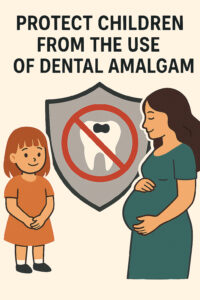
The African Regional Centers of the Basel and Stockholm Convention supported the Children’s Amendment of the Minamata Convention by organising webinars in cooperation with the World Alliance for Mercury-Free Dentistry. The Children’s Amendments entered into force on 28 September 2023 and requires Parties to take action to protect Children from the use of dental amalgam..

Read More »

tracker

Updated: Global Dental Amalgam Tracker

Global Overview of Countries Phasing Out Dental Amalgam: According to the Minamata Conventions Full National Reports 2021, the MIAs, or other official documents, the global transition to a mercury-free dentistry is fully underway…

Read More »

Lessons learned from countries phasing out dental amalgam in public programs

Experiences from European countries demonstrate successful pathways for the transition to mercury-free oral health care. As effective and affordable alternatives are available, the primary challenge remains, to establish financial arrangements with dentists to provide aesthetic fillings in public programs. It should be borne in mind that dental amalgam is far more expensive than most, if not all, alternative materials when the high environmental costs are taken into account…

Read More »

CHEMICAL NEWS Germany

Chemiepolitische Mittagstalks 2025

In den chemiepolitischen Mittagstalks 2025 widmen wir uns der Frage, wie Chemikalien in der Umwelt wirken, wo sie überall nachweisbar sind und welche Konsequenzen das für Mensch und Natur hat. Wir blicken auf verschiedene Umweltmedien und Organismen, beleuchten aktuelle Forschungsergebnisse und diskutieren politische Handlungsmöglichkeiten. Zum vollständigen Programm…

Read More »

Brief an den Bundeskanzler

NGOs fordern den Bundeskanzler auf, sich für die Regulierung von PFAS in der Europäischen Union auszusprechen. Die sogenannten „Ewigkeitschemikalien“ werden in zahlreichen Verbraucherprodukten, zum Beispiel in Kochpfannen oder Kosmetika, eingesetzt, aber auch in vielen Industrieprozessen und in Pestiziden werden sie genutzt.

Read More »

Für eine Welt ohne Verschmutzung durch PFAS

Zivilgesellschaftliches Positionspapier: Per- und polyfluorierte Alkylsubstanzen (PFAS) sind eine Gruppe von über 10.000 chemischen Substanzen, die u. a. wegen ihrer Stabilität und wasser-, öl- und schmutzabweisenden Wirkungen in sehr vielen Bereichen verwendet werden. Aufgrund ihrer Stabilität werden sie in der Umwelt nicht abgebaut (“Ewigkeitschemikalien”) und können über sehr lange Zeiträume hinweg Umwelt- und Gesundheitsschäden hervorrufen.

Read More »

EnvMed Germany

work areas

Clinical Environmental Medicine

The health impact of chemicals in the environment is constantly increasing. There is a significant associated rise in neurological, autoimmune and cancer diseases. Male fertility decreases dramatically. However, when patients visit the doctor, hardly any examinations are carried out for possible chemical exposures.

Research
-

We bring researchers and practitioners in the fields of chemical biology, environmental medicine and medical geology together to showcase the recent developments and address global challenges we face today within the field of chemical toxicology and immunology.

Prevention of Toxic Burdens

Our mission is to advocate and support the adoption and implementation of legally binding instruments which contain mandatory obligations to eliminate where feasible, and otherwise minimize, the global use of hazardous chemicals, the global demand for hazardous chemicals, releases of hazardous chemicals to the environment, and human and wildlife exposure to hazardous chemicals.

Subscribe to
our newsletter

Stay informed!